
Some of my best memories are canning with my grandma, mom and aunt when I was young. My grandpa, uncle and dad also helped out by running the canners on a separate stove so production was constant. I also fondly remember canning with my mom and my own sons when they were young. This past week a new generation participated in our family canning legacy.
Applesauce is a family favorite and apples have been plentiful and often free or very inexpensive this year due to COVID and limited selling outlets. We had Granny Smith apples for pie filling and Honeycrisp apples for applesauce. The house smelled wonderful with the fragrance of cooking apples!
This year’s frustrations
Canning has not been without challenges this year. There has been a shortage of canning lids and those that have been available are outrageously expensive. I finally found a source that was more reasonably priced so we could proceed with preparing for winter. It was surprising when one of the main ingredients, Minute Tapioca, for our Apple Pie Filling was also unavailable. I use the same recipe for Apple, Pear, and Peach Pie Filling. In fact, when my hubby was picking up groceries there was only one bag of sugar left in the store. It’s been a bit frustrating.
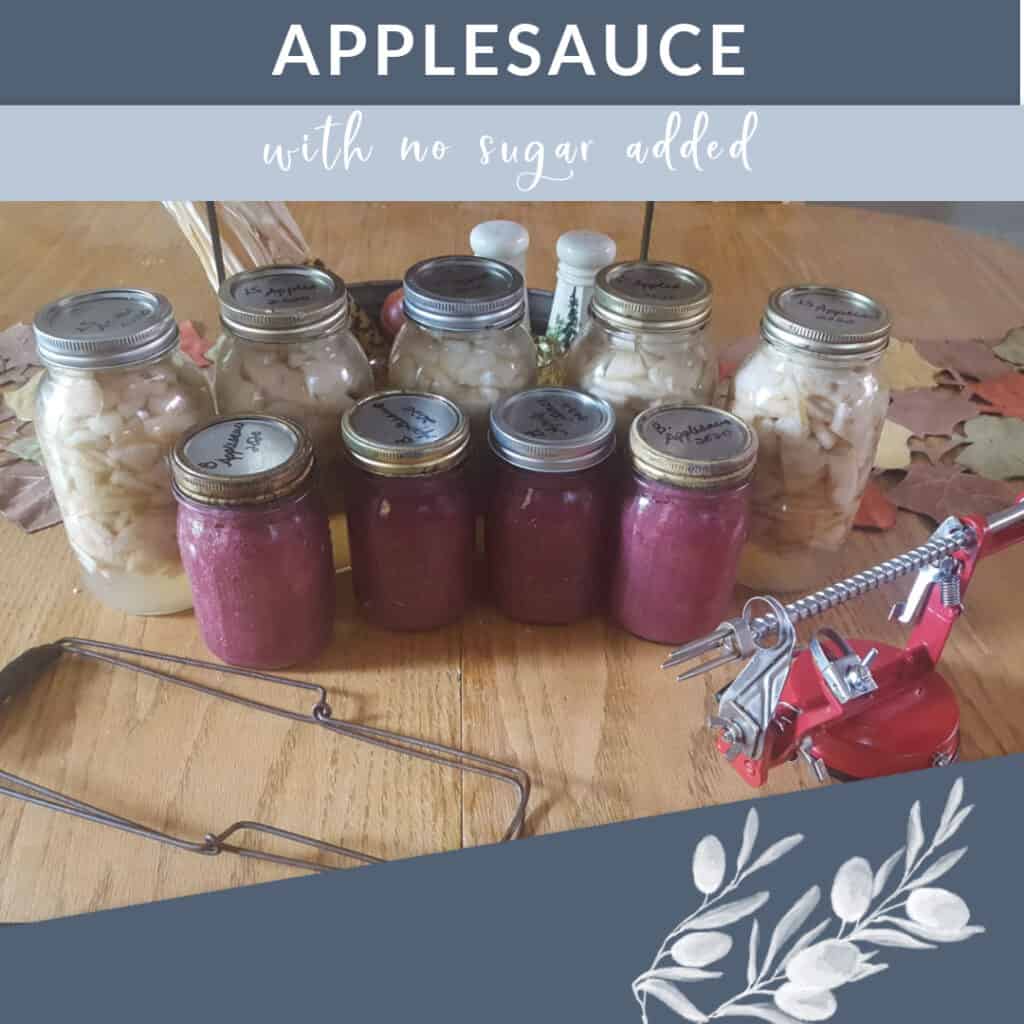
So what did we make? Instead of canning our usual pie filling, we canned sliced apples. We can add the thickening when we actually make the pies, cobblers, and crisps. We only used two cups of sugar in for the whole batch so it is less than a 1/3 cup per jar. Hopefully, there won’t be a shortage of corn starch this winter. We’ve already endured a shortage of flour. We canned 10 quarts of sliced apples.
As a said above, applesauce is a family favorite. For my hubby and I, we canned in pint jars since there are only two of us. For my son’s family, we canned in quart jars. We don’t add sugar to our applesauce. The Honeycrisp apples are sweet enough without it. We canned 3 quarts of plain sauce and 2 quarts/4 pints of blueberry applesauce. We will call it purple applesauce since one granddaughter doesn’t like blueberries but she will eat it if she doesn’t know. I’ve shared our recipe below.
We worked together
Everyone participated including our preschool grandson, Ronan.
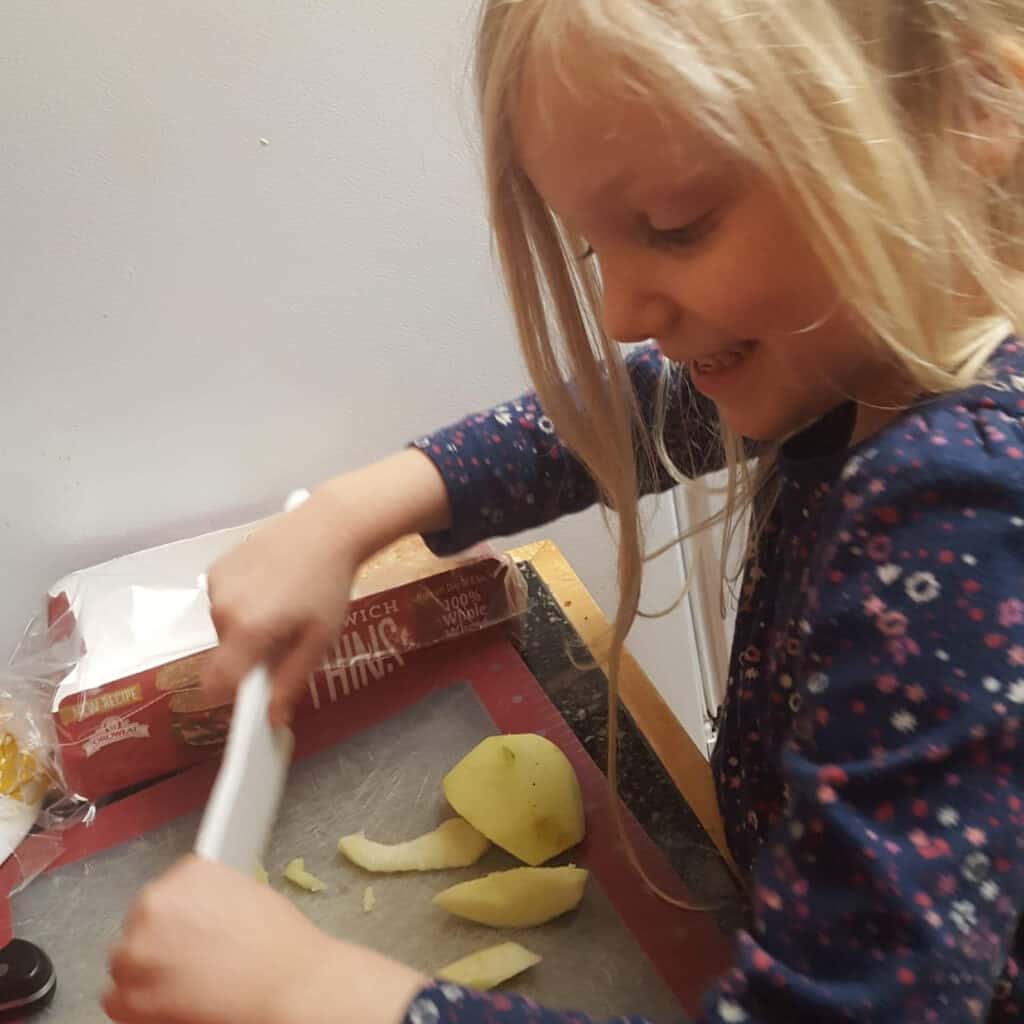
Our middle granddaughter, Ilona, used a special kid’s knife to help slice apples for pie filling.
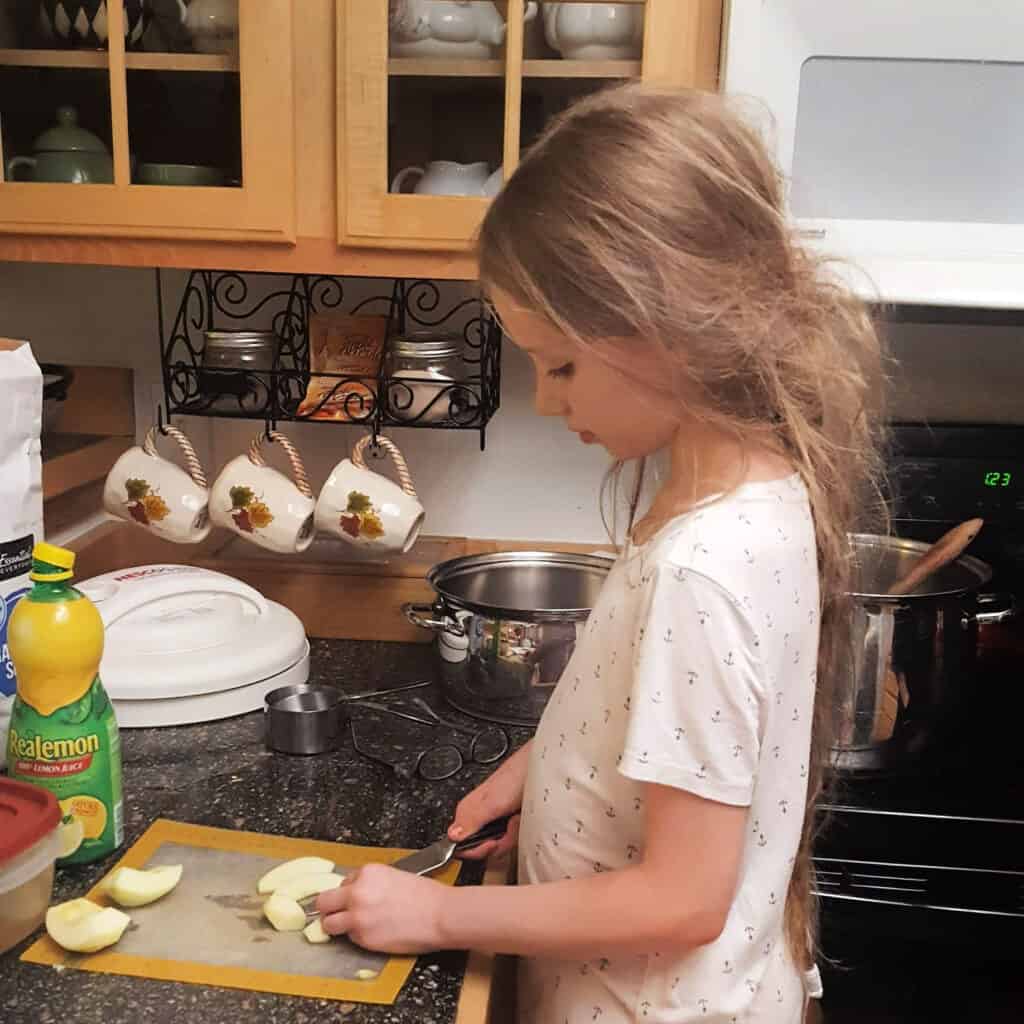
Nora, our oldest granddaughter, has graduated to using real knives and she also helped slice apples.
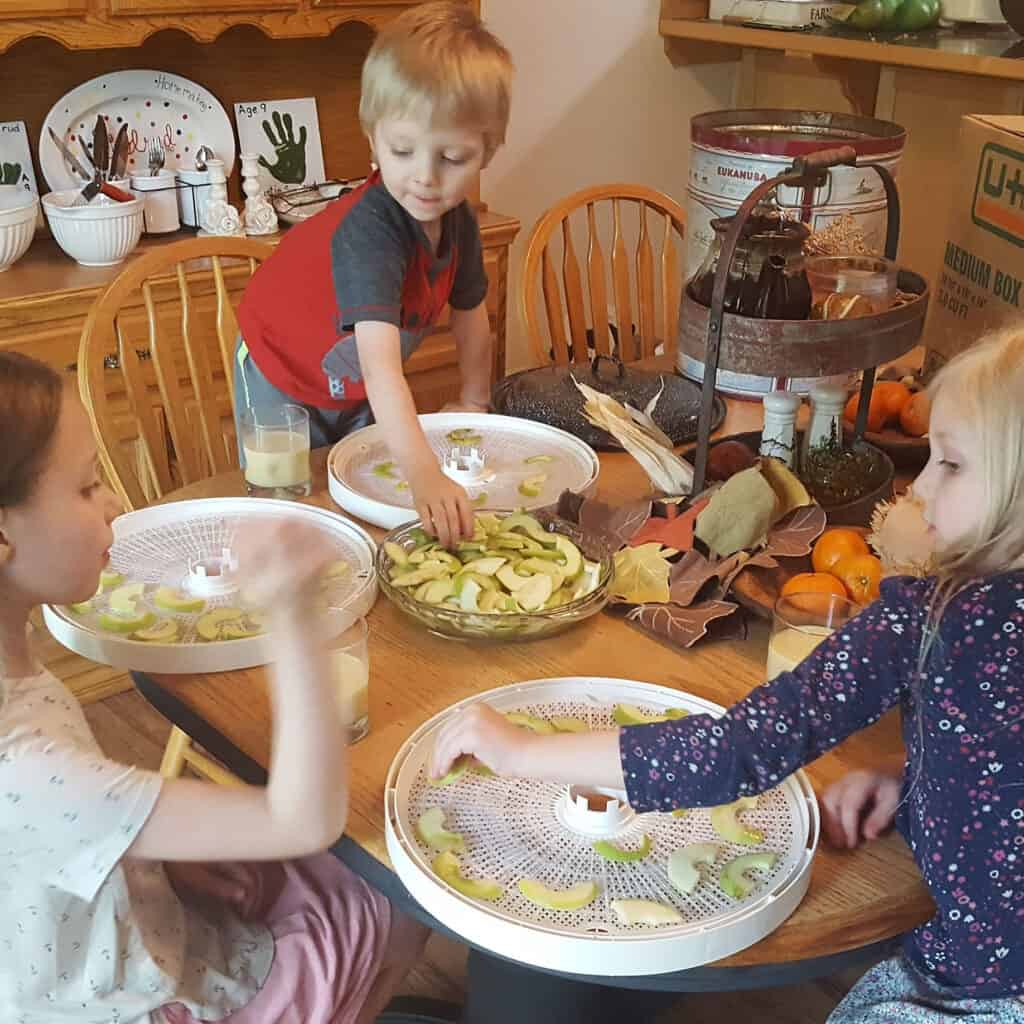
All three of them helped load the dehydrator with slices for apple chips.
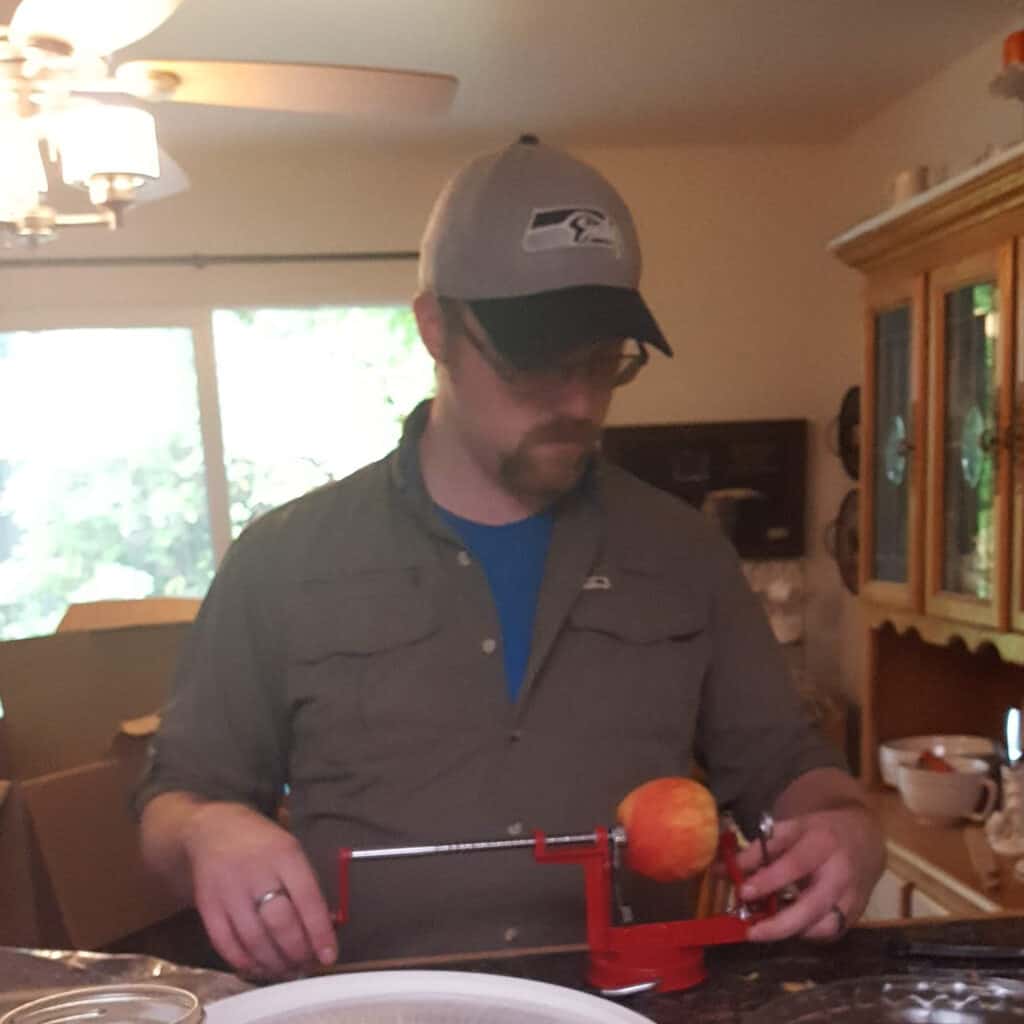
My son Ryan ran the apple peeler.
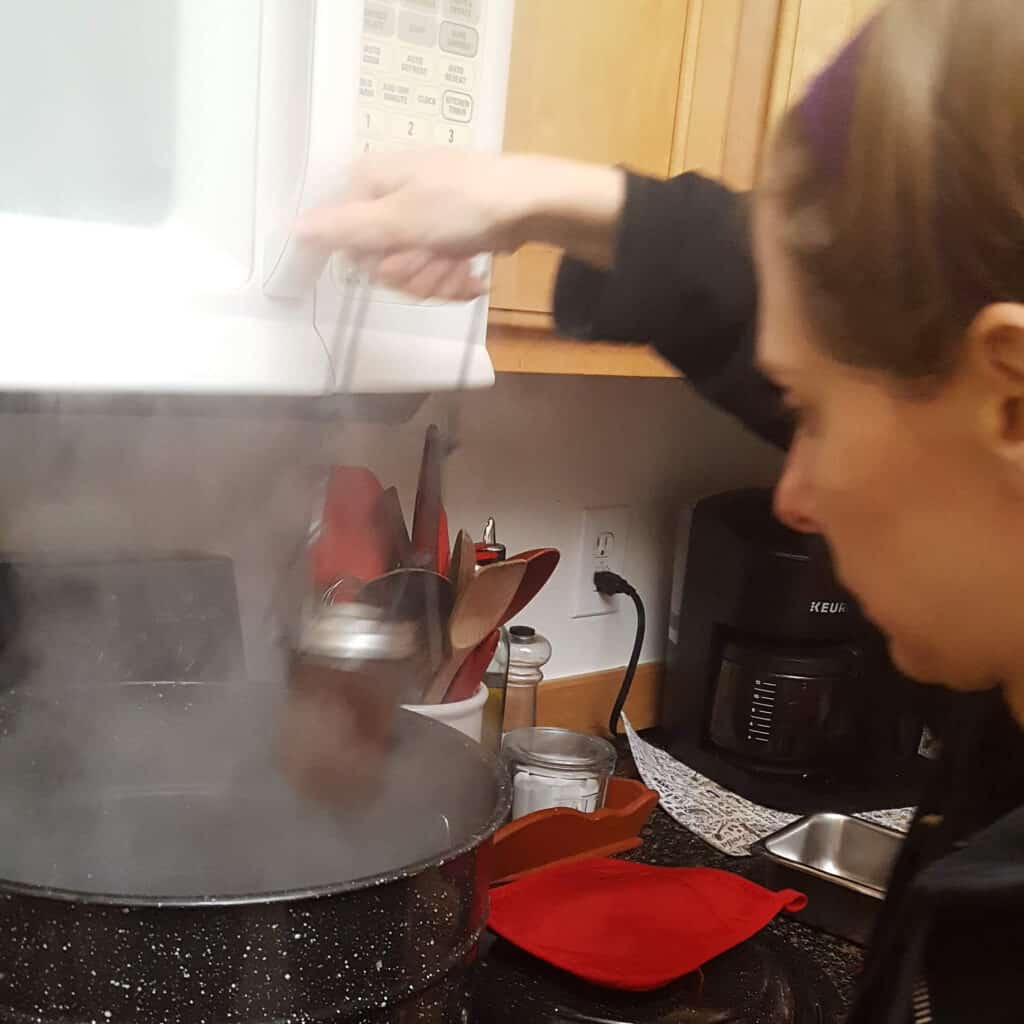
Our daughter-in-love Emily unloaded the canner.
It was a fun day working together and followed by the kids doing their homeschooling assignments. Then, we enjoyed a great dinner of chicken soup made by Grandpa (my hubby Rod) with dumplings by Grandma (me).
We try not to waste
We try to use all parts of the fruit. In this case, we used apple peels and cores to make Apple Peel Vinegar. It takes two to four weeks to ferment and be usable. Apple Peel Vinegar is not acidic enough to use in canning recipes but works well in cooking and baking. I’ll share the results and a recipe when it is done.
Canning and most homemaking tasks are more enjoyable when they are shared. Do you can, bake, cook, decorate, or clean with your family? Share pictures in the comments below. Our next generations won’t learn how to do these tasks unless we teach them. And the lessons are not just for our daughters and granddaughters!
Thank you for letting me share my heart for home and family with a glimpse into how we work together.

Canned Applesauce

Equipment
- Large stock kettle
- Waterbath Canner with rack for jars
- Apple Peeler, optional
- Measuring cups, liquid and dry
- Large bowl
Ingredients
- 10 lbs apples
Instructions
- Peel and core apples. I prefer to use an apple peeler that peels, cores, and slices the apples all in one step. However, a peeler and knife work just as well. Place peeled apples in a large bowl of water with a few tablespoons of lemon juice to prevent them from browning.
- Put apples in a large stock kettle and add just enough water to prevent scorching. Stir often to check for apples sticking to the pan. Add small amount of water if needed.
- When apples are soft and easily pierce with a fork, use an immersion blender to puree the applesauce. You can make it as smooth or chunky as you prefer.
- Using a ladle and funnel, pour applesauce into prepared and sanitized jars. Run a knife down the inside edge of the jar to remove any visible air bubbles. Wipe the rim of the jar, top with a flat sealing lid and ring. Place in a rack in the water bath canner that has warm water in it.
- When all the jars are filled and in the canner, fill the canner with hot tap water to one inch above the jars. Bring the water to a boil and then set the timer for 20 minutes.
- While jars are processing, prepare a place for the jars to cool. It needs to be draft-free to guard against jars breaking from being hit by cold air. I use a double layer of dish towels on a protected area of my kitchen counter. (Please be careful if you place your hot jars on a wood table. The steam damaged the finish and my table had to be refinished.)
- At the end of processing time, turn off stove burner. Use a jar lifter to remove jars from canner and set them on prepared, folded dish towels. Allow to cool overnight before checking the seal. You will know the jars are sealing when you hear the pop of the vacuum pulling the lid down.
- When jars are cool, wipe with a damp rag to remove any sticky residue from the outside of the jar, label (I use a Sharpie to write the name of product and year canned on the lid), and store until ready to use.
- FOR FRUIT FLAVORED APPLESAUCE: If you like applesauce that is flavored with other fruits, add the fruit at the beginning of the cooking process. I have added 2 cups of berries (blueberries, strawberries, or blackberries) or 3 bananas or 2 cups of chopped peaches.